

How to Measure Your SEO Success: The Real Metric Most Businesses Ignore
Wondering how to measure SEO success? Discover the real indicator of effective SEO: long-term client retention, sustainable rankings, and consistent organic growth.
Search Engine Optimization is often surrounded by numbers, rankings, impressions, clicks, traffic, and backlinks. Businesses frequently evaluate SEO performance based solely on these metrics. However, these numbers can sometimes create a short-term illusion of success rather than reflecting real, sustainable growth.
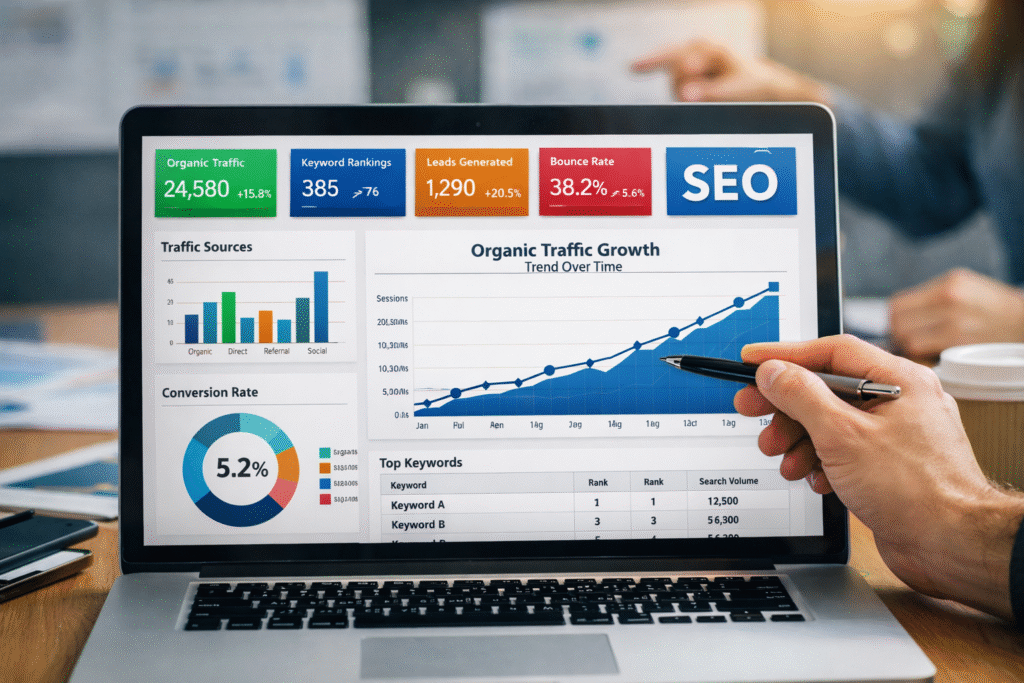
The real success of SEO is not determined by a temporary spike in rankings or a short burst of traffic. Instead, the true measure lies in long-term organic growth, consistent visibility, and the ability to retain clients or business outcomes over time.
Understanding how to measure SEO success properly can help businesses invest in strategies that generate sustainable digital growth rather than short-term gains.
Why Measuring SEO Success is Often Misunderstood

Many businesses assume that SEO success is simply about ranking #1 on Google. While rankings are important, they represent only one part of the larger picture.
SEO success involves multiple dimensions, including:
organic traffic quality
user engagement
lead generation
conversion rates
long-term visibility
Focusing solely on rankings can lead to strategies that prioritize quick wins over sustainable performance.
True SEO success comes from building a strong digital foundation that continues to generate traffic and leads over time.
The Real Metric Most Businesses Ignore: Longevity
Long-Term Client Retention and Sustainable Results
One of the strongest indicators of effective SEO is how long the strategy continues to deliver results.
For agencies and consultants, a powerful benchmark is simple:
If a client continues working with the same SEO partner for years, it often indicates that the SEO strategy is producing real, measurable impact.
Sustainable SEO is not about short bursts of rankings but about building a search presence that compounds over time.
When SEO is done correctly, it creates:
- steady organic traffic growth
- stable keyword rankings
- increasing domain authority
- Ongoing lead generation
These outcomes cannot be achieved through short-term tactics.
Key Metrics That Actually Define SEO Success
1. Organic Traffic Growth
Organic traffic remains one of the most important indicators of SEO performance.
A healthy SEO strategy should show gradual and consistent growth in organic traffic over time rather than sudden spikes followed by declines.
Important indicators include:
- steady monthly growth
- increased traffic from target keywords
- traffic from high-intent search queries
Traffic growth signals that search engines recognize the website as a credible and relevant source of information.
2. Keyword Visibility and Rankings
Keyword rankings are one of the most commonly tracked SEO metrics.
However, the focus should not be on ranking for just a few keywords, but on expanding visibility across a broader keyword portfolio.
Successful SEO strategies often result in:
- ranking for hundreds or thousands of keywords
- improved visibility for long-tail queries
- consistent presence in search results
Broad keyword coverage increases the stability of organic traffic.
3. Conversion and Lead Generation
Traffic alone does not determine SEO success. The real value of organic traffic lies in its ability to generate business outcomes.
Important conversion metrics include:
- lead form submissions
- product purchases
- demo requests
- contact inquiries
High-quality SEO attracts users who are actively searching for solutions, which often leads to higher conversion rates compared to other channels.
4. User Engagement Signals
Search engines evaluate how users interact with websites.
Key engagement indicators include:
- time spent on the page
- bounce rate
- pages per session
- return visitors
When users spend more time engaging with content, it signals that the website provides valuable and relevant information.
5. Backlinks and Domain Authority
Backlinks from credible websites act as votes of confidence for search engines.
Strong SEO strategies often lead to:
- natural backlink acquisition
- improved domain authority
- Higher credibility within the industry
Backlinks remain one of the most influential ranking factors in search algorithms.
The Difference Between Short-Term SEO and Sustainable SEO
Short-term SEO tactics often aim to generate quick results but fail to create a lasting impact.
Short-Term SEO
- aggressive link-building tactics
- keyword stuffing
- temporary ranking spikes
- unstable results
Sustainable SEO
- high-quality content creation
- strategic keyword targeting
- strong technical SEO foundations
- consistent content publishing
Sustainable SEO focuses on long-term growth rather than temporary rankings.
Why SEO is a Long-Term Investment?
Unlike paid advertising, which stops generating results once the budget ends, SEO continues delivering value long after the initial work is completed.
Well-executed SEO can:
- generate traffic for years
- reduce customer acquisition costs
- increase brand visibility
- strengthen digital authority
Over time, SEO compounds in value as content and backlinks accumulate.
The Simplest Way to Judge SEO Success
A simple way to evaluate SEO effectiveness is to ask two questions:
- Is organic traffic steadily increasing?
- Is the website generating consistent leads or business opportunities?
If both answers are yes, the SEO strategy is likely delivering real value.
For agencies, another strong indicator is long-term client relationships, which usually reflect consistent performance and trust.
Final Thoughts
Measuring SEO success requires looking beyond surface-level metrics. While rankings and traffic are important, the real indicators of success are sustainability, consistent growth, and measurable business outcomes.
SEO is not a quick tactic but a strategic investment in long-term digital visibility.
Businesses that focus on sustainable SEO strategies often benefit from:
- Ongoing organic traffic
- stronger search visibility
- lower marketing costs over time
- consistent lead generation
Ultimately, the true measure of SEO success is not how quickly a website ranks, but how long it continues to perform and deliver value.
related blog
-
WordPress vs Webflow: Which Platform is Better for Your Website in 2026?
-
Figma vs Webflow: Website Design vs Development Explained
-
Impact of eBooks in Digital Marketing: Lead Generation & Brand Authority
-
Neuromarketing in UI/UX: How the Brain Decides Before the User Thinks
-
Designing for Trust: Psychological Triggers That Make Users Say ‘Yes’
-
AEO vs SEO: Why Answer Engine Optimization Is Rising in 2026?
-
Emerging UI/UX Trends for 2026: A Complete Breakdown
-
How to Measure Your SEO Success: The Real Metric Most Businesses Ignore
-
Why Good UI/UX Still Fails: The Psychology Traps Designers Overlook

Begin Your Karma

Karmic Presence

INDIA
- elephant@karm.digital
- Vraj Valencia, Behind Mahindra Showroom, Sarkhej Bridge, Sarkhej - Gandhinagar Hwy, Sola, Ahmedabad, Gujarat 380060