Emerging UI/UX Trends for 2026: A Complete Breakdown
Get a clear breakdown of emerging UI/UX trends for 2026. Discover how AI-led design, immersive visuals, Zero UI, and accessibility-focused interfaces are revolutionizing digital experiences. Ideal for brands planning their next digital move.
Introduction:
In a world where consumer behaviour shifts faster than algorithms, a single year feels like an entire psychological era. Staying ahead isn’t optional for brands anymore; it’s the only effective strategy.
If you’ve ever stayed up late browsing Dribbble or Figma community posts, wondering “what’s next in UI/UX?”, then 2026 is shaping up to be a wild ride. The tools we use, the interactions we design, the expectations users have – all are evolving faster than ever.
At Karm Digital, we’re decoding the deeper patterns trending in UI/UX in 2026. Because:
“Great UI/UX isn’t just about how a product looks or functions, it’s about how it makes people feel – confident, curious, understood, and in control.”
Below, we’ll walk you through the major UI/UX trends 2026 that are going to rock 2026. Let’s dive into this.
1. AI-Led Interfaces: Design That Thinks Ahead
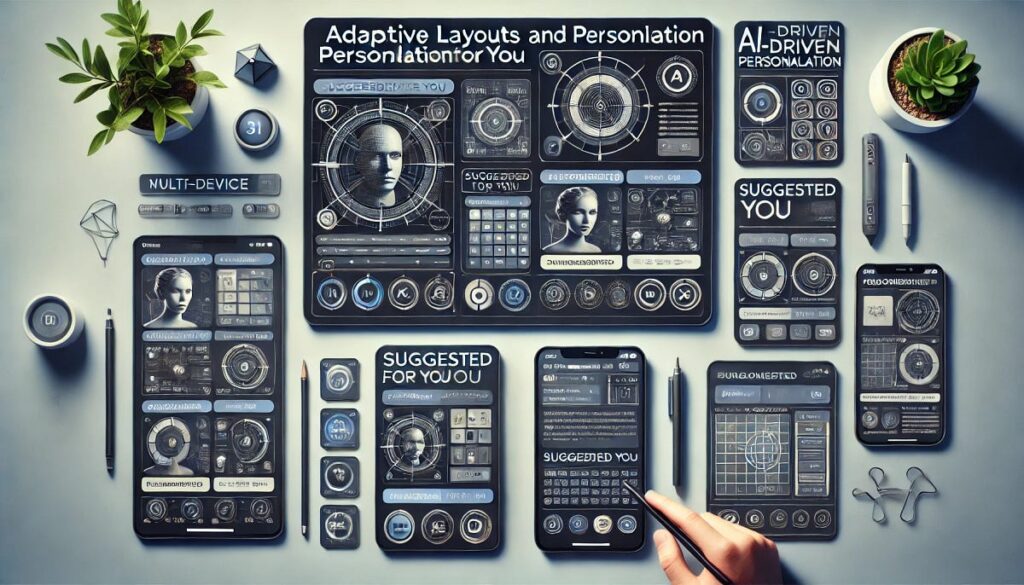
2026 is the year digital experiences stop waiting for user input and start thinking ahead. AI has moved from being a behind-the-scenes helper to becoming the central intelligence of modern UI/UX.
AI-led design now enables interfaces that:
- Adapt layouts in real time based on behaviour
- Guide journeys proactively instead of relying on clicks
- Offer conversational support that feels human
- Predict next steps before the user asks
This shift transforms UX design trends 2026 from a static experience into a living, learning system.
Users no longer navigate interfaces – interfaces navigate for them. Digital products feel smarter, cleaner, and far more intuitive, boosting satisfaction and reducing effort.
Examples:
Nike Training Club adapts workout plans and recommendations based on your fitness level, past workouts, and goals, giving you a dynamic dashboard tailored to your routine.
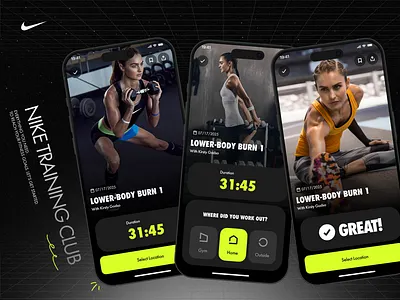
AI-led interfaces don’t just make tasks easier – they make products feel alive and intuitively aware. At Karm, we build context-aware flows and low-friction journeys that let users get more done with fewer steps.
2. Zero-UI: When Interaction Becomes Effortless
Zero-UI is the movement toward experiences that operate with minimal visible interface and maximum intelligence.
Instead of tapping through layers of menus, the system surfaces what matters – when it matters the most.
Key behaviours include:
- Auto-suggestions replacing full search flows
- Background actions completing multi-step tasks
- Interfaces that adjust to location, time, or device
- Screens that simplify themselves depending on context
Examples:
HealthifyMe automatically tracks your nutrition, workouts, and health patterns through data inputs and integrations. Instead of the user choosing what to see, the app highlights what’s most relevant right now.
Zero UI design trend offers something rare: UX that feels simple but is powered by deep intelligence. At Karm, we build context-aware flows and low-friction journeys that let users get more done with fewer steps.
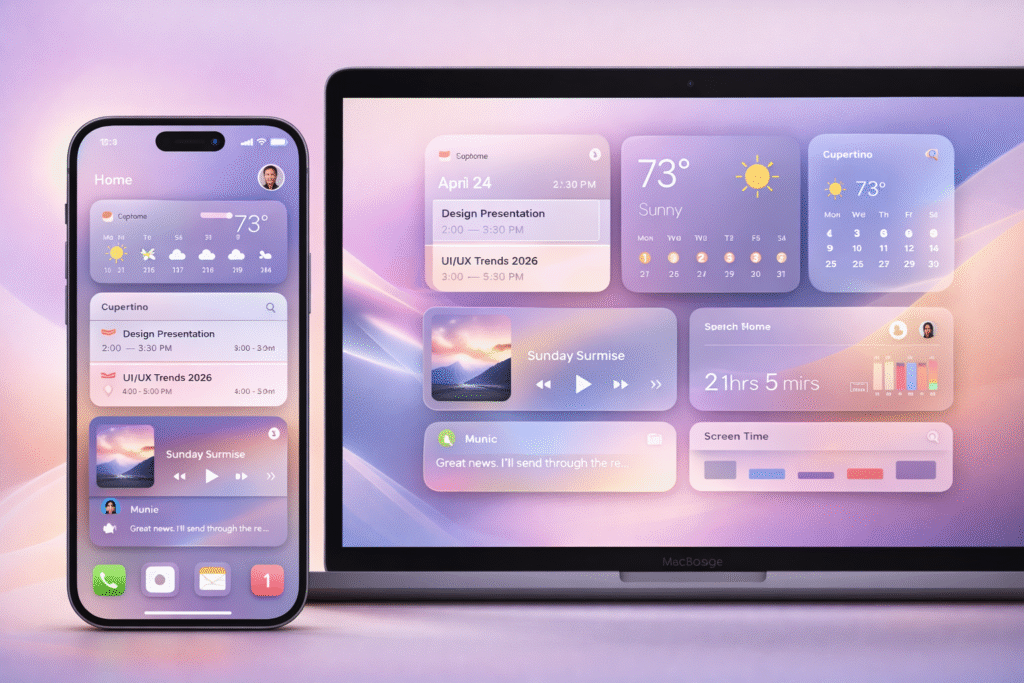
3. Immersive Visuals: Depth, Motion & Liquid Glass
The era of flat UI is fading into a more dimensional, tactile aesthetic.
2026 visual design uses:
- Liquid glass layers
- Soft blur and transparency
- Depth-based visual hierarchy
- Smooth, micro-motion transitions
For Example, think Apple’s latest design language – soft, premium, atmospheric.
These visuals signal modernity while improving clarity, trust, and usability. Our design team actively integrates depth, motion, and modern visual systems to give brands a polished, forward-looking identity.
4. Hyper-Personalization: Interfaces That Adapt to You
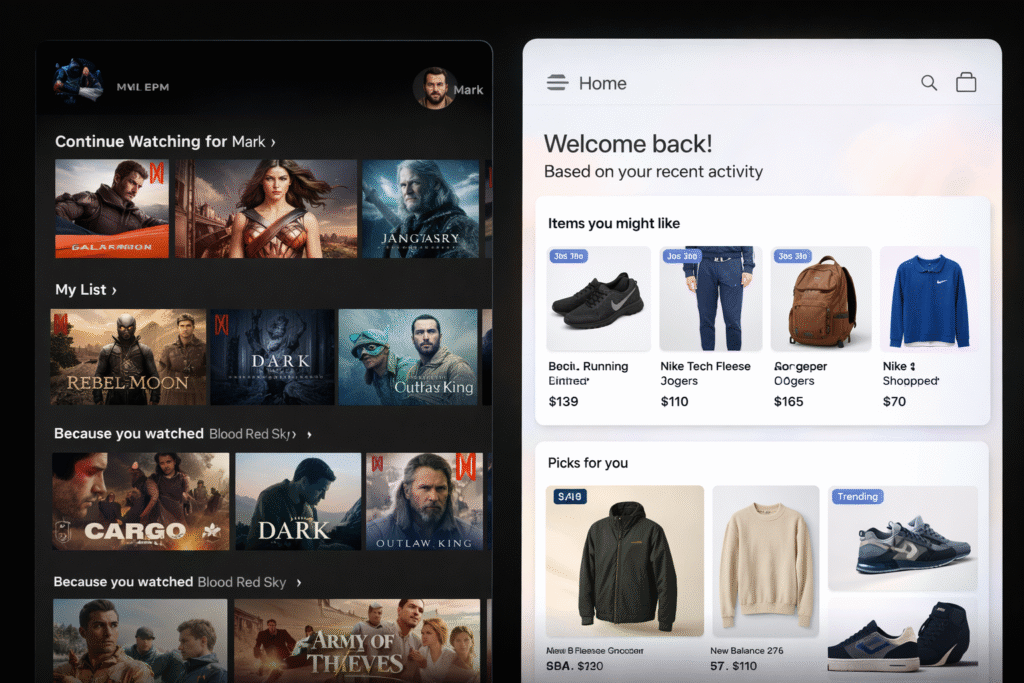
Generic interfaces are disappearing. UX design trends 2026 are dynamic, contextual, and responsive to behaviour.
Hyper-personalisation includes:
- UI layouts that evolve based on usage
- zSxss
- Content and tone that shift based on intent
- Notifications that adapt to the user’s rhythm
reorganising based on shopping history.
Examples:
Streaming apps like Netflix are just showing thumbnails and categories as you watch, and E-commerce homepages are reorganizing based on shopping history.
This trend creates experiences that feel more human and less mechanical. Karm designs adaptive UI systems that personalise experiences ethically and intelligently – without complicating the interface.
5. Accessibility-First Design: Designing for Everyone
Accessibility has moved to the centre of UI/UX. The “average user” is no longer the design default. Accessibility-first design includes:
- High-contrast modes
- Scalable, dyslexia-friendly typography
- Clear, simplified navigation
- Reduced-motion options
- Voice, gesture, and touch input flexibility
Examples:
Bank of America:
- Has Erica, an AI voice assistant for app navigation + transactions
- Supports screen readers, high-contrast mode & large text options
- Known for strong accessibility compliance and inclusive UX
Accessibility doesn’t limit creativity; it elevates usability for all users. At Karm, we follow accessibility-first principles from wireframe to final design, ensuring every journey is inclusive and easy to navigate.
6. Speed & Smoothness: Performance Is the New Aesthetic
Users are impatient, and 2026 UX treats performance as a design decision. If it feels slow, it feels broken.
Core priorities:
- Near-instant load times
- Zero-lag animations
- Fluid transitions between sections
- Lightweight UI components
Examples:
Netflix often preloads data behind the scenes – e.g., thumbnails, video metadata, for shows it predicts you might open next (based on your browsing/watch history).
In short, fast UX enhances credibility, confidence, and conversion, especially for mobile-first audiences. That’s why we design with performance in mind, creating lightweight, efficient interfaces that respond instantly and feel effortless.
7. Multi-Modal Interactions: Beyond Screens
2026 UX expands beyond tapping on screens. Users now expect experiences that blend voice, gesture, AR, and real-world interaction.
This creates new opportunities in:
- Retail (AR try-ons)
- Fitness (gesture-driven UI)
- Automotive (voice-first navigation)
- Education (mixed reality learning)
Examples:
Amazon Echo (and Alexa) connects to various smart-home devices (lights, thermostats, locks, speakers, etc.). Using voice commands, users can instantly control these devices through natural speech, no menus needed.
Multi-modal UX makes digital experiences more natural, mirroring how humans actually interact with the world. Karm Digital is ready for this trend as we explore voice flows, AR-ready UI, and gesture-friendly interactions for brands ready to innovate beyond screens.
8. Motion-Based Storytelling: Experiences That Unfold
Motion has become a strategic communication tool instead of a mere decoration. Expect:
- Scroll-triggered storytelling
- Onboarding sequences with animations
- Step-by-step product reveals
- Micro-motions that highlight important actions
Examples:
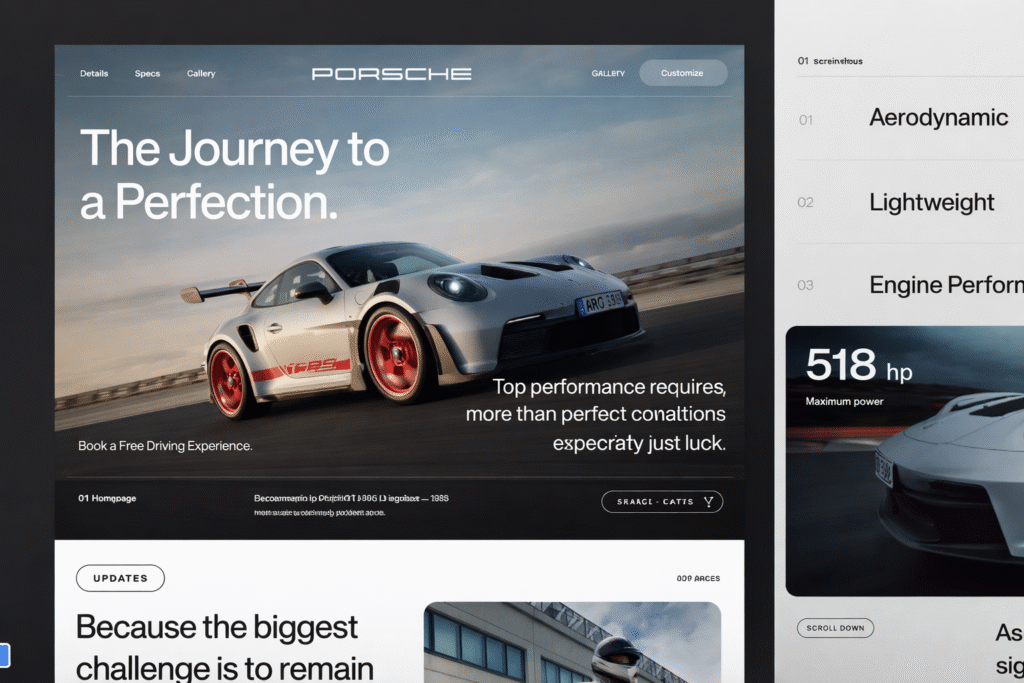
Porsche Car & Luxury sites: Some automotive and lifestyle-brand websites use scroll-based storytelling – animations, background shifts, transitions – to evoke emotion, context, and aspirational identity as you scroll, not just list features.
Motion simplifies complexity and elevates storytelling – turning information into an experience. To meet this trend, we craft purposeful motion design and scroll-based storytelling to turn brand journeys into immersive experiences.
9. Bold, Expressive UI: Design That Refuses to Blend In
2026 encourages brands to move beyond templates and embrace originality. Bold, expressive UI captures attention in a world filled with sameness.
Key elements include:
- Oversized, confident typography
- Unique colour systems
- Asymmetric layouts
- Distinctive visual voice
Examples:
Florence Libbrecht’s Portfolio
Listed in a curated showcase for top portfolios – her site uses large, confident typography, striking visuals, and a flow that feels more like an editorial than a typical portfolio.
Bold UI isn’t about decoration, it’s about building brand memory. Karm develops expressive, distinctive UI identities that help brands stand out in crowded digital spaces.
10. Ethical & Sustainable UX: Trust as a Design Feature
Users in 2026 are highly aware of manipulation and digital clutter. Trust now comes from simplicity, clarity, and responsibility.
Ethical UX includes:
- Removing dark patterns
- Transparent data usage
- Reducing unnecessary sensory load
- Energy-efficient interface choices
Examples:
Ecosia uses a lightweight, minimal design that reduces energy consumption while ensuring fast, smooth performance even on slower networks.
Ethical UX builds long-term loyalty, and in an age of skepticism, that’s priceless. We follow ethical design standards, simplify journeys, and prioritise transparent, user-respecting practices across all projects.
How Karm Digital Designs For the Future
The brands that lead in 2026 won’t be the ones following trends; they’ll be the ones designing ahead of them.
At Karm Digital, we build digital experiences that are:
- Intelligence-driven
- Fast and frictionless
- Emotionally engaging
- Visually modern
- Inclusive for every user
- Designed for the next shift in technology
We help brands evolve from simply looking good to becoming unforgettable.
Ready to Future-Proof Your Digital Experience?
If your brand wants to stay ahead, not just this year, but for the next wave of digital transformation – we’re here to build that future with you.
Let’s create digital experiences your customers won’t just use, they’ll remember.
Connect with Karm Digital today.